Related Articles
- How Mobile Accounting Influences Entrepreneurial Mental Health and Work-Life Balance in Gig Economies
- The Quiet Costs: How Mismanaged Time Data Quietly Undermines Small Business Growth and Decision Making
- Top 5 Trailblazing AI-Powered Financial Reporting Apps Revolutionizing Accuracy and Speed Since 2019
- How Behavioral Economics Shapes Decision-Making in Financial Record Matching and Discrepancy Resolution
- How Subtle Shifts in Supplier Relationships Secretly Affect Your Company's Financial Health and Liquidity Balance
- Top 6 Payroll Solutions Born in the Last Five Years That Are Quietly Taking the Gig Economy by Storm
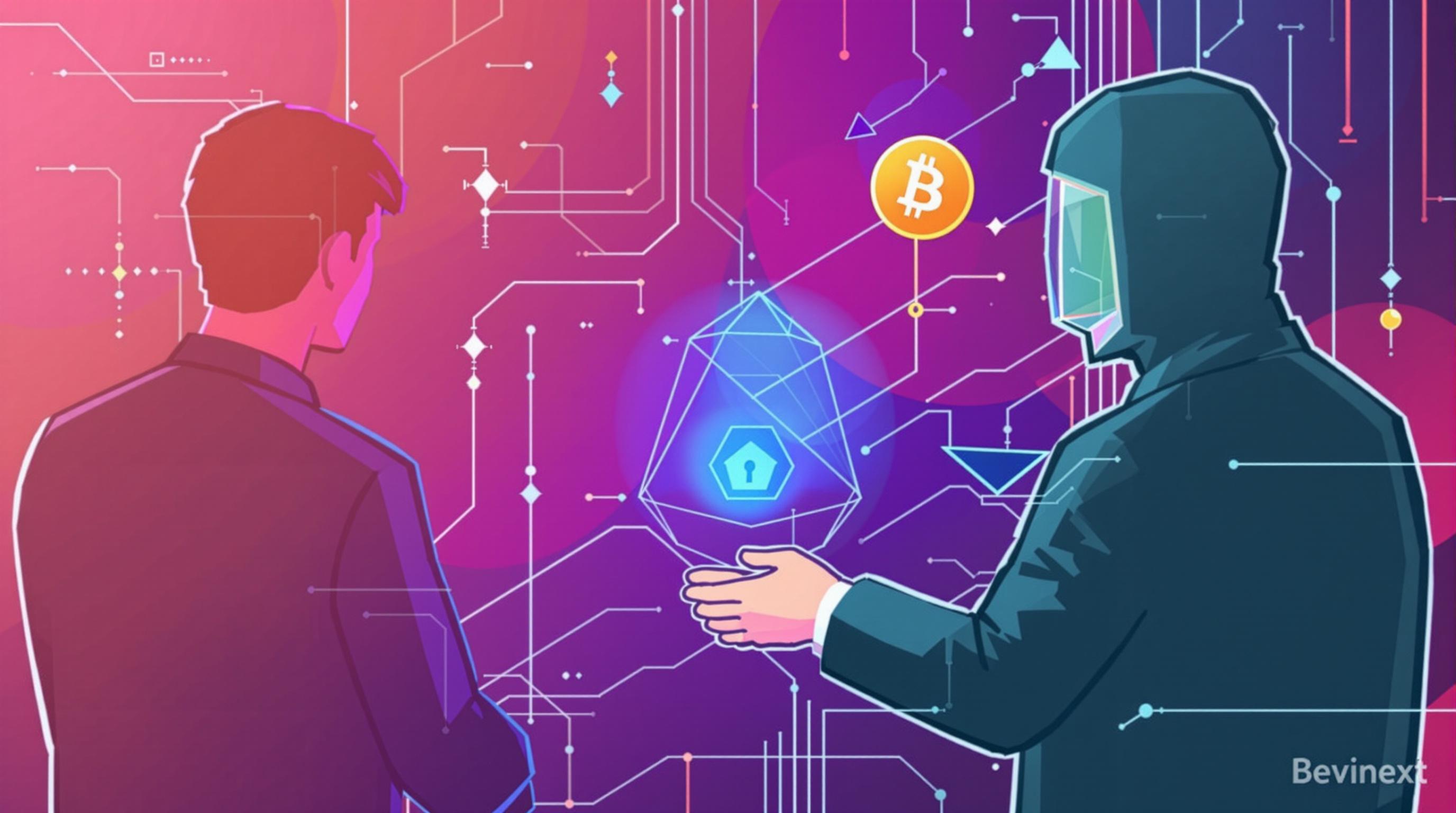
How Blockchain is Quietly Transforming Employee Payment Security in Niche Industries
How Blockchain is Quietly Transforming Employee Payment Security in Niche Industries
Blockchain technology is stealthily revolutionizing how niche industries handle employee payments by enhancing security, transparency, and efficiency. This article explores its impact, benefits, challenges, and real-world use cases across specialized sectors.
The Middleman Becomes the Sleeper Agent
Ever thought about how much money disappears in transaction fees or delayed payroll processing? Traditional payment systems often feel like that annoying middleman who just won’t get out of your way. Enter blockchain—a decentralized ledger that automates and secures the payment process, effectively cutting out unnecessary intermediaries.
For instance, consider the entertainment industry, where freelance artists and technicians often grapple with late payments. A blockchain-enabled smart contract can trigger an automatic payment the instant a job milestone is verified. That’s a dream come true for freelancers who usually survive on prompt cash flow.
Statistics Talk: Trust in Blockchain Payments
According to a 2023 survey by Deloitte, 59% of companies in emerging sectors like renewable energy and creative arts have begun adopting blockchain solutions for payroll, citing increased transparency and fraud reduction. Meanwhile, employee satisfaction related to payment security saw an uptick of 25% in organizations utilizing blockchain payroll systems.
A Day in the Life: Blockchain in Agriculture
Picture Ana, a farm laborer in a small rural community, who once waited weeks for paycheck clearance. With blockchain-based payments, Ana now receives timely, tamper-proof transactions straight to her digital wallet, regardless of her location.
This use case highlights how blockchain overcomes geographic and infrastructural barriers, particularly in industries like agriculture, where workers are often isolated from traditional banking systems.
Let’s Get Technical (But Not Too Much)
Because blockchain operates on a distributed ledger, every payment transaction is recorded in multiple places simultaneously, making the data virtually immutable and highly secure. It also means employees can track payments in real time without needing to call HR every other day.
Smart contracts—self-executing contracts with terms embedded in code—are the backbone of this revolution. When predefined conditions (like hours worked or project completion) are met, payments are automatically released. This cuts down human error and drastically reduces the chances of fraudulent activities.
Spotlight: How Blockchain Combats Payroll Fraud
Payroll fraud costs companies an estimated 5% of their annual revenue (Association of Certified Fraud Examiners, 2022). By leveraging blockchain’s transparency and traceability, companies in niche sectors—from healthcare temp agencies to boutique consultancies—can detect and prevent fraud more effectively than ever before.
Fun Fact Break!
Did you know? The first recorded case of blockchain-based payroll was implemented in 2017 by a small startup paying its remote developers in Bitcoin. Today, it’s a proven method across diverse fields.
Challenges on the Blockchain Highway
Despite all the shiny benefits, it’s not sunshine all the way down. Integration with existing HR and payroll systems remains a hurdle. Many companies face steep learning curves and initial setup costs.
Moreover, scalability and transaction speed—especially on public blockchains—can be problematic for large firms. Some industries, like niche biotech or artisanal manufacturing, are experimenting with private blockchains to maintain confidentiality and better control.
A Word on Regulation
Regulatory uncertainty around cryptocurrency payments and blockchain payrolls creates a gray area. Some governments embrace the technology, while others lag behind, causing hesitancy among companies. It’s a slow dance between innovation and compliance, but more governments are crafting blockchain-friendly policies each year.
Casual Chat: Why Should You Care?
Hey, if you’re a freelancer, contractor, or even a full-time employee in a specialized industry, understanding this shift matters—even if just a little. You don’t want your paycheck to be held hostage by old-fashioned systems or shady middlemen, right?
The peace of mind knowing your payments are secure, timely, and transparent is priceless. As someone in my mid-thirties who’s juggled odd jobs, I can tell you that waiting for payments is stressful. Blockchain might seem like tech jargon, but it’s quietly making life easier for workers everywhere.
Case Study: Renewable Energy Sector
SunVolt Innovations, a midsize renewable energy firm, adopted blockchain for employee payments in 2022. By implementing smart contracts, they reduced payroll errors by 40% within one year and improved employee trust scores by 30%. This example illustrates how even traditional industries with niche specializations benefit immensely.
Looking Forward: The Future Landscape
As blockchain technology matures, integration with Artificial Intelligence and IoT devices could further transform employee payments—imagine biometric time-tracking devices immediately triggering payroll without manual input!
The convergence of these technologies promises not just security, but efficiency and fairness in niche industries that have long struggled with payroll reliability.
A Slightly Humorous Take: Blockchain’s Secret Superpower
Let’s admit it—payroll departments are sometimes the unsung heroes, juggling complex data and deadlines. But imagine if they had a superpower: blockchain! No more deciphering cryptic spreadsheets or wrestling with “lost payments.” Instead, you can just “set it and forget it.” It’s like having a robotic assistant who never sleeps or gets cranky.
But like all heroes, blockchain comes with its quirks—sometimes mysterious, occasionally misunderstood, but almost always worth the hype when deployed right.
Final Thoughts from an Elder Statesman of Tech (Age 62)
Having witnessed the evolution from punch cards to cloud computing, I find blockchain’s quiet entrance into payment security both refreshing and promising. It addresses long-standing issues of trust and payment delays with elegance, especially in specialized industries that were often overlooked by mainstream financial technology.
For younger generations stepping into these niche fields, embracing blockchain could be as transformative as the internet was for communication decades ago.