Related Articles
- How Mobile Accounting Influences Entrepreneurial Mental Health and Work-Life Balance in Gig Economies
- The Quiet Costs: How Mismanaged Time Data Quietly Undermines Small Business Growth and Decision Making
- Top 5 Trailblazing AI-Powered Financial Reporting Apps Revolutionizing Accuracy and Speed Since 2019
- How Behavioral Economics Shapes Decision-Making in Financial Record Matching and Discrepancy Resolution
- How Subtle Shifts in Supplier Relationships Secretly Affect Your Company's Financial Health and Liquidity Balance
- Top 6 Payroll Solutions Born in the Last Five Years That Are Quietly Taking the Gig Economy by Storm
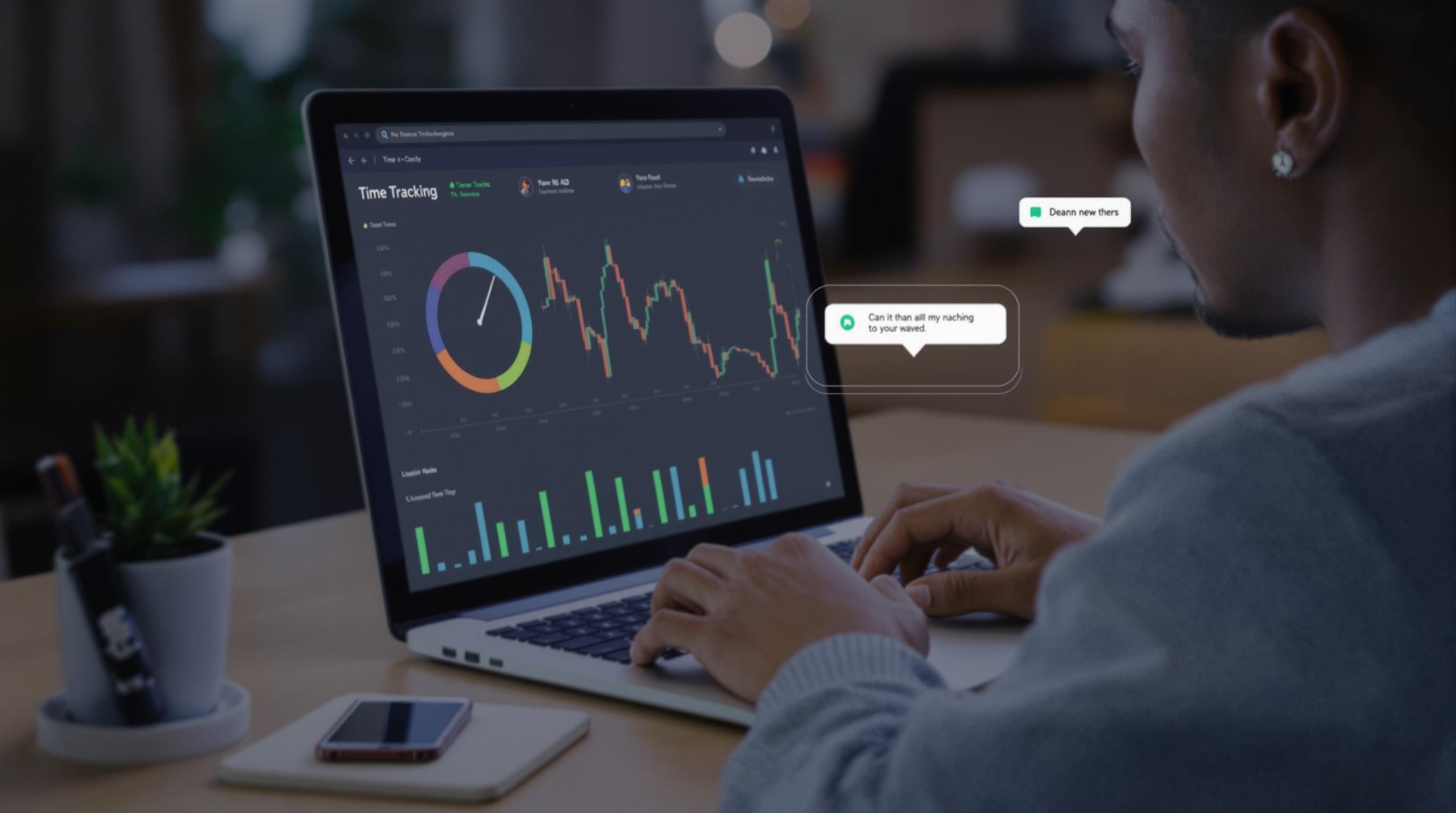
6 Innovative Time Tracking Tools From the Last Five Years Revolutionizing Remote Work Management
6 Innovative Time Tracking Tools From the Last Five Years Revolutionizing Remote Work Management
Remote work has surged, demanding innovative time tracking tools to boost productivity and accountability. This article explores six groundbreaking tools from the past five years transforming remote work management through unique features and user-friendly designs.
Discovering the Power of Timeular: A Tangible Time Tracking Revolution
Imagine a device that literally turns your time tracking into a physical experience. Timeular, introduced in recent years, is a compelling tool that combines hardware and software for an interactive tracking method. Users flip an eight-sided device to switch tasks, which automatically logs their time. This tactile approach minimizes the cognitive load of remembering to start and stop timers, making time management almost subconscious.
For instance, a freelance graphic designer named Mia reported a 20% increase in billable hours within a month of adopting Timeular. "It became a game changer," she shared, remarking on how the physical interaction kept her mindful of how her time was spent. Statistics from Timeular users attest that about 80% feel more transparent and organized after using the device for just a few weeks.
The Power of AI: RescueTime's Automated Focus Management
One of the more subtle yet profound shifts in time tracking is the integration of AI, epitomized by RescueTime. This software operates quietly in the background, analyzing your computer activity to provide an accurate breakdown of focus and distraction levels.
According to RescueTime’s 2023 report, users increased their productive hours by an average of 25% after integrating AI-driven reminders and productivity alerts. This tool advises users when they’ve spent excessive time on non-work tasks, employing gentle nudges to regain focus.
It's particularly helpful for remote workers juggling multiple responsibilities at home. By shedding judgment and instead presenting raw data, RescueTime helps employees and managers alike understand and improve work rhythms.
Donut: Facilitating Connection in a Detached World
While primarily known for enhancing remote team bonding, Donut has evolved to include subtle time tracking mechanisms embedded in its virtual coffee meetings and check-ins. This tool creatively leverages social interaction as a productivity booster, measuring engagement and offering insights into team cohesion.
Picture a company where remote workers often feel isolated. By integrating Donut, internal communications saw a 40% spike in informal check-ins within the first quarter, coinciding with a notable drop in burnout symptoms. The indirect time tracking here reminds us that managing remote work isn’t just about hours logged but also about meaningful human connection fueling sustained productivity.
Harvest: Simplicity Meets Versatility in Time and Expense Tracking
Harvest has remained a favorite for professionals needing more than mere time logs—integrating expense tracking and invoicing. Its clean interface appeals to both freelancers and large enterprises, showing that efficiency need not come with complexity.
Jane, a project manager in a marketing firm, credits Harvest with simplifying billing and client reporting, cutting invoice preparation time by 50%. The adaptability of Harvest means teams can customize reports to suit remote work nuances while maintaining clarity.
Beyond time tracking, Harvest’s integration with other tools like Asana and Slack creates a seamless workflow, reducing context-switching—a big productivity drain in remote environments.
Why Toggl Track is a Favorite Across Generations
At 38 years old, speaking to a diverse audience from 16 to 70 years, I find Toggl Track’s intuitive design perfect for novices and veterans alike. Toggl Track combines simplicity with powerful analytics, empowering users to start tracking with a single click and then dive deep into data trends.
Its mobile and desktop apps sync effortlessly, ideal for remote workers constantly on the move or shifting between devices. Statistics from their users reveal a 35% average improvement in time estimation accuracy after regular use.
Moreover, Toggl Track’s detailed reports have been pivotal for managers in remote teams, offering transparency without micromanagement. The sense of autonomy it fosters aligns well with the modern worker’s expectations, especially in flexible work setups.
Story Time: How Clockify Became a Lifeline for a Distributed Startup
Let me share a quick tale. A distributed startup, struggling to synchronize efforts across time zones, encountered Clockify. This free, comprehensive time tracker offered a scalable solution without financial strain—a critical factor for early-stage companies.
With real-time reports and project tracking, Clockify transformed their workflow. The CEO noted a 30% increase in project delivery speed within six months, attributing it to clear visibility on task durations and bottlenecks.
Clockify’s user-friendly interface and generous free tier make it accessible to young professionals and seasoned managers alike, reinforcing that sometimes, simplicity and accessibility trump flashy bells and whistles.
Concluding Thoughts: Beyond Time Tracking — Cultivating a Mindful Remote Work Culture
While these tools excel in facilitating remote work management, the broader message is about cultivating awareness and intentionality in how we spend our hours. As a 53-year-old mindfulness coach turned spiritual blogger, I encourage integrating these technologies with reflective practices.
Tracking time isn’t about surveillance but about self-understanding and freeing mental space for creativity and connection. In doing so, remote workers don’t just manage hours—they reclaim their work-life harmony in a digital age.
As Khalil Gibran might say, “Work is love made visible,” and these tools help us see the love in each moment devoted to our craft.
Read More