Related Articles
- How Mobile Accounting Influences Entrepreneurial Mental Health and Work-Life Balance in Gig Economies
- The Quiet Costs: How Mismanaged Time Data Quietly Undermines Small Business Growth and Decision Making
- Top 5 Trailblazing AI-Powered Financial Reporting Apps Revolutionizing Accuracy and Speed Since 2019
- How Behavioral Economics Shapes Decision-Making in Financial Record Matching and Discrepancy Resolution
- How Subtle Shifts in Supplier Relationships Secretly Affect Your Company's Financial Health and Liquidity Balance
- Top 6 Payroll Solutions Born in the Last Five Years That Are Quietly Taking the Gig Economy by Storm
When Transaction Histories Collide: Unraveling the Mysteries of Anomalies in Financial Records
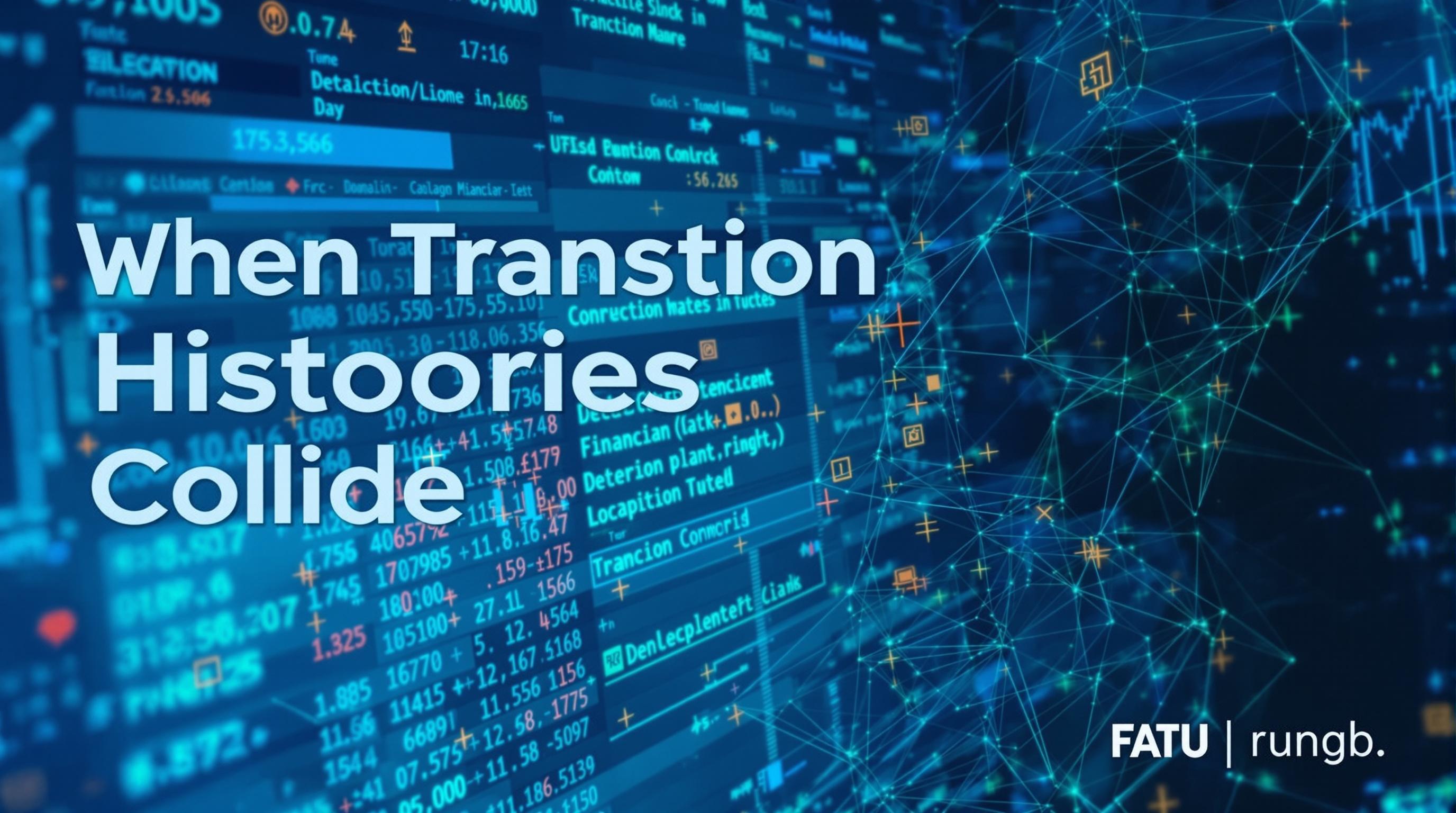
When Transaction Histories Collide: Unraveling the Mysteries of Anomalies in Financial Records
Financial record anomalies often stem from overlapping transaction histories, creating a complex puzzle for auditors and analysts alike. This article dives into the causes, consequences, and case studies of such anomalies, unraveling how they can impact both individuals and large corporations.
The Confounding Clash of Transaction Histories
Imagine two separate financial systems trying to talk over one another — that's what happens when transaction histories collide. This phenomenon is not just a technical glitch; it can reveal deeper issues of fraud, error, or systemic risks lurking beneath seemingly straightforward accounts. As a 65-year-old financial journalist with decades of experience, I've observed these anomalies cause ripple effects from personal finance to multinational corporations.
Why Do Transaction Histories Collide?
When multiple systems or methods record the same financial activity independently, discrepancies often emerge. These can be due to timing mismatches, differences in currency conversions, or even software errors. A 2019 study by the Association of Certified Fraud Examiners estimated that 20% of financial irregularities involved data mismatches or duplication of transaction records.
Example: The Case of the Missing Millions
Take the infamous "XYZ Corporation Incident" of 2017, where over $12 million was temporarily unaccounted for. The cause? Different departments logged transactions in divergent accounting systems that failed to sync. The clash led to duplicate entries and missing sums, triggering a multi-month audit to restore confidence among stakeholders.
Auditing Through the Maze
Serious detective work is required to unwind these tangled threads. Auditors often employ data analytics tools, machine learning algorithms, and forensic accounting techniques to identify anomalies. The challenge is akin to solving a jigsaw puzzle where some pieces have been altered or duplicated, confusing the bigger picture.
The Human Element
Errors in entering transactional data aren't always mechanical — human error remains a major contributor. A casual slip, like swapping digits or recording payments twice, can snowball into larger inconsistencies. A 2022 survey by PwC highlighted that 35% of financial statement errors resulted from manual input mistakes.
Conversational Chat: "So, Why Should We Care?"
Friend 1: "Okay, but how does a couple of crossed transactions really impact someone like me?"
Friend 2: "Well, think about your bank statement suddenly showing you paid rent twice in one month. It messes your budgeting and can affect your credit score if unresolved."
Stories from the Field
In 2020, a mid-size retailer discovered a 15% drop in revenue over two months because double-booked refunds distorted sales figures. The finance team had to sift through thousands of transactions manually to reconcile records, a process that delayed financial reporting and upset investors.
Creative Approach: Visualizing the Issue
Picture two overlapping waves in a sea of numbers. Each wave represents a transaction history, and when they crash into each other, the resulting turbulence is the anomaly seen in records. This turbulence can obscure true financial health, leading to misguided decisions and mistrust.
Machine Learning: The New Sheriff in Town
Advances in AI are revolutionizing how we detect these anomalies. Machine learning models can flag inconsistent transactions by comparing patterns over thousands of accounts at lightning speed. According to Deloitte's 2023 report, AI-assisted audits have improved anomaly detection rates by up to 40%.
Persuasive Note
If businesses don't invest in advanced anomaly detection technologies, they're rolling the dice with their financial integrity. It's not just about catching errors but preventing costly missteps before they escalate into scandals or financial losses.
Behind the Scenes: Causes Unfolded
Technical glitches such as synchronization failures between legacy systems and cloud-based platforms often contribute. Regulatory changes and inconsistent financial reporting standards across regions further muddy transactional consistency, posing hurdles for global companies.
Statistics Speak
According to the Journal of Financial Compliance (2021), 28% of multi-national corporations admitted to reporting discrepancies stemming from cross-border transaction timing differences.
Humorous Relief
Ever tried balancing a checkbook in 2024? It’s like juggling flaming torches while riding a unicycle — stand still for a second, and boom, financial chaos! Transaction anomalies are the metaphorical banana peels on this circus tightrope.
Consequences That Matter
The fallout of colliding transaction histories can be severe: mistrust among investors, regulatory fines, and in worst cases, collapse of entire firms. Consumers might suffer from frozen accounts or erroneous billing, leading to frustration and loss of confidence in financial institutions.
Moving Forward: Best Practices and Recommendations
Organizations should prioritize integrated financial systems with real-time data syncing, robust internal controls, and periodic reconciliation. Continuous employee training on accurate data entry and awareness of anomaly signs complements technological measures. Transparency with stakeholders during audits also builds trust.
Closing Story: A Young Auditor’s Triumph
At age 28, I once interviewed an auditor who uncovered a multi-million-dollar fraud disguised as overlapping transaction errors in a tech startup. His meticulous attention to these anomalies not only saved the company but set new standards for anomaly detection in fintech.
Ultimately, when transaction histories collide, vigilance, cutting-edge technology, and human insight must work hand-in-hand to reveal the truth hidden in the noise.